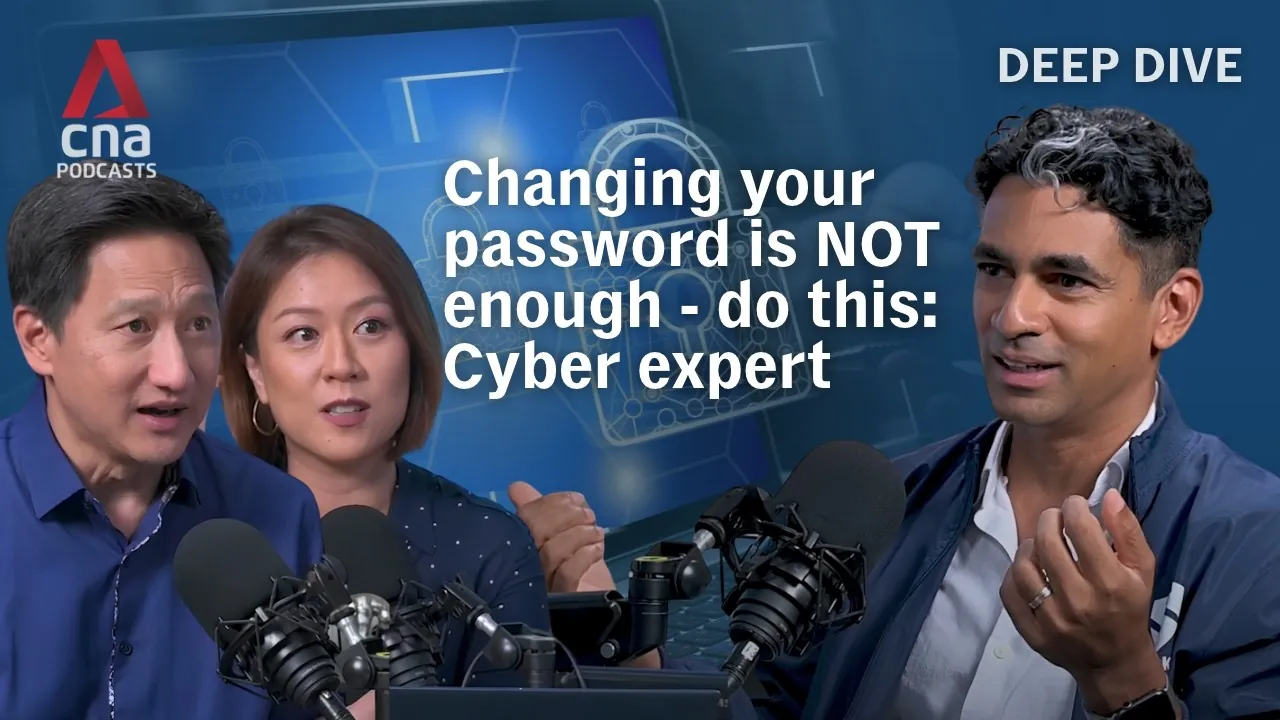
What Can Hackers Do With Your Leaked Data?
More than most people expect. The episode works through the details exposed in recent breaches, from IC numbers and birthdates to travel bookings, health records and a child's allergies, and what an attacker can do with each. One detail on its own can look harmless. Several together make a scam message far more convincing.
Health records get a segment of their own. You can change a leaked password, but you cannot change your medical history. The conversation also covers how AI is changing cyberattacks, making it easier for scammers to put stolen data to use.
Why Use More Than One Email Address?
It is the tip CNA highlighted when it published the episode, and it costs nothing. If you use one address for everything, a single breach links your bank, your shopping and your social accounts. Keep separate addresses for the parts of your life that matter most and a leak at one service exposes only that one address. It also makes scams easier to spot. A message claiming to be from your bank looks wrong when it lands in the inbox you only use for online shopping.
Why Do Hackers Go After Smaller Suppliers?
The episode asks how prepared businesses, especially small ones, are to protect the data customers leave with them. Large organisations pass customer data to suppliers to process, host or deliver, and those suppliers usually have far less protection. Breaking into the supplier is often the easier way in. Gaurav made a related point on CNA in February, about how security requirements now flow down the supply chain.
If your business holds customer data, you are part of someone else's exposure. The basics still do most of the work. Protect every device, give your team a password manager, check whether staff passwords have turned up in leaks, and train everyone to spot phishing. StrongKeep puts those in one place for small teams.
Where Can I Watch the Full Episode?
The episode runs just under 36 minutes. It is on CNA's YouTube channel, and as a podcast on the CNA website.
Jump to a topic on YouTube:
- 2:15, why data breaches are surging in Singapore
- 3:12, how AI is changing cyberattacks
- 7:13, what hackers can do with personal data
- 11:20, why leaked health records are dangerous
- 16:15, using multiple email addresses for protection
- 19:04, whether password managers are safe to use
- 23:10, what to do after a data breach
- 27:23, why hackers target third-party vendors
- 33:50, three habits to reduce your cybersecurity risk
- More companies are losing your data to hackers. How compromised are you?, CNA Deep Dive, 19 November 2026
Related Reading
- Why are smaller companies targeted more and protected less?, Gaurav on CNA after leaked documents pointed to 255 Singapore firms being hit.
- Why are 99% of companies exposed to cyber crooks?, Gaurav in The Straits Times.
- Is it safe to let an AI agent act for you?, Gaurav on CNA938's morning show.
Frequently Asked Questions
Who discussed data breaches on CNA's Deep Dive?
Gaurav Keerthi, CEO and co-founder of StrongKeep, joined hosts Tiffany Ang and Steven Chia on Deep Dive, the Channel News Asia (CNA) podcast, in an episode published on 19 November 2026. The episode runs just under 36 minutes and is on the CNA website and CNA's YouTube channel.
Why use more than one email address?
A breach at one service then exposes only the address you used there. Separate addresses for banking, shopping and sign-ups limit how much of your life one leak reveals, and a message claiming to be from your bank stands out when it arrives at your shopping address.
Why do hackers target third-party vendors?
Large organisations share customer data with smaller suppliers, and those suppliers usually have far less protection. Breaking into the supplier can be the easier route to the data. If your business holds data for clients, protecting every device, using strong and unique passwords and training staff to spot phishing make you a much harder target.
What Does StrongKeep Do?
StrongKeep is a self-serve cybersecurity platform for small and medium businesses. It bundles endpoint protection, phishing and malicious-link filtering, credential management, staff awareness training and phishing simulations, all run by the business itself from one dashboard. Compliance tooling is available on higher plans. StrongKeep holds the CSA Cyber Essentials Mark. Built for teams without an IT department. Plans are on the pricing page.